Paylaş | 14 November 2025
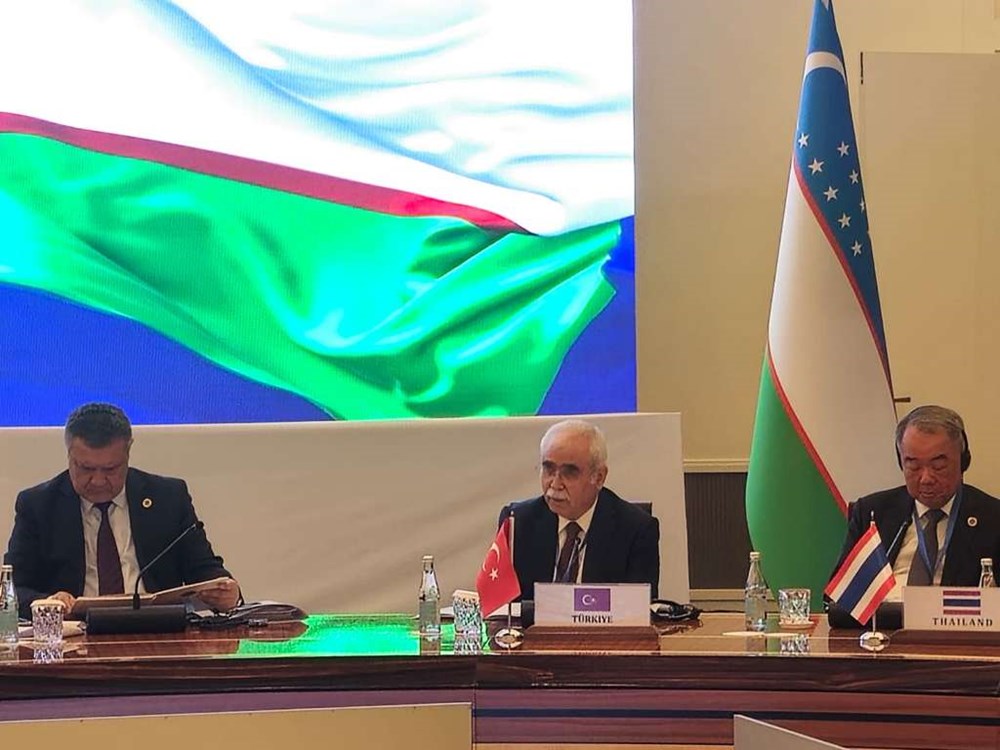
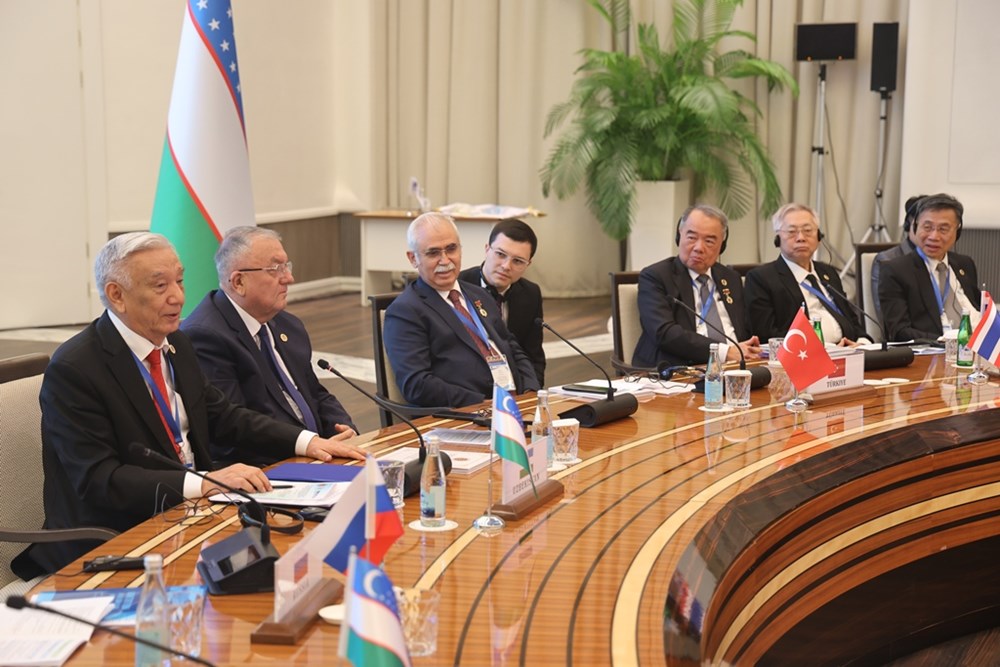
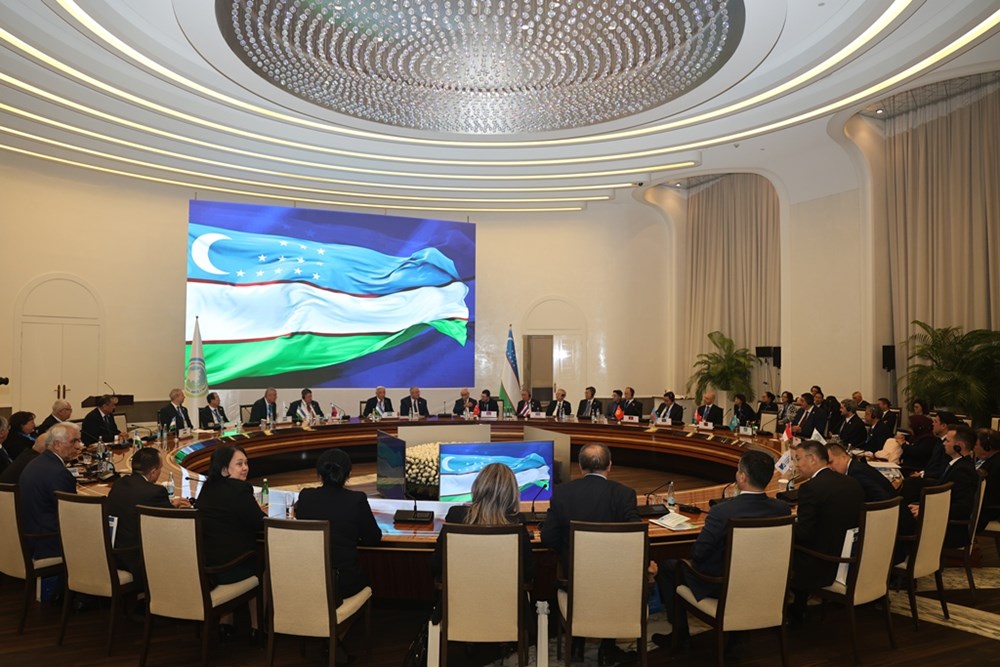
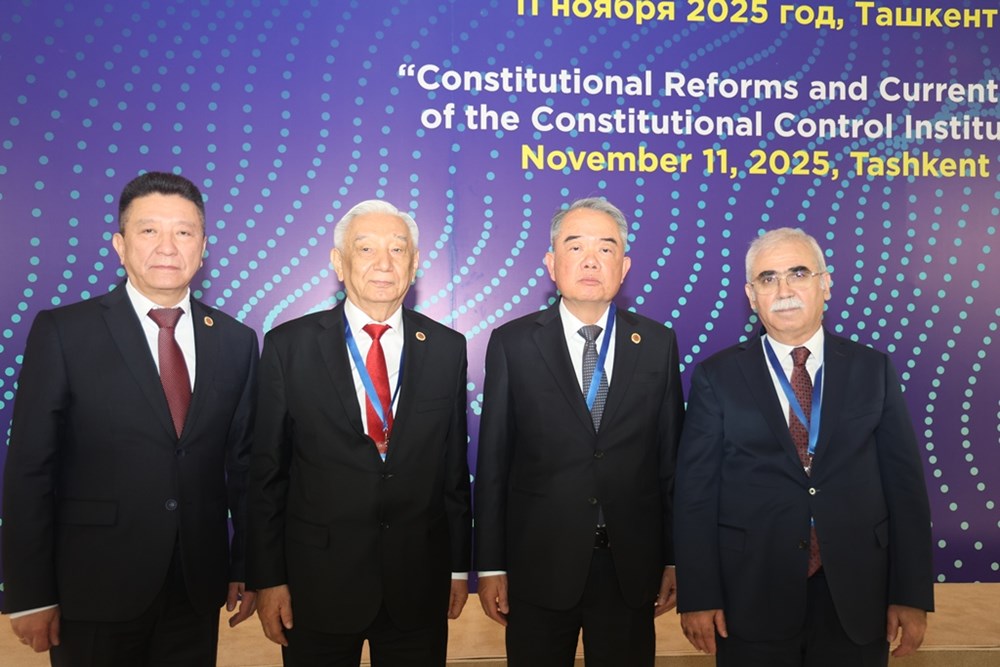
President of the Constitutional Court of the Republic of Türkiye, Mr. Kadir Özkaya, participated in an international conference held in Uzbekistan as well as the handover ceremony of the Presidency of the Association of Asian Constitutional Courts and Equivalent Institutions (AACC).
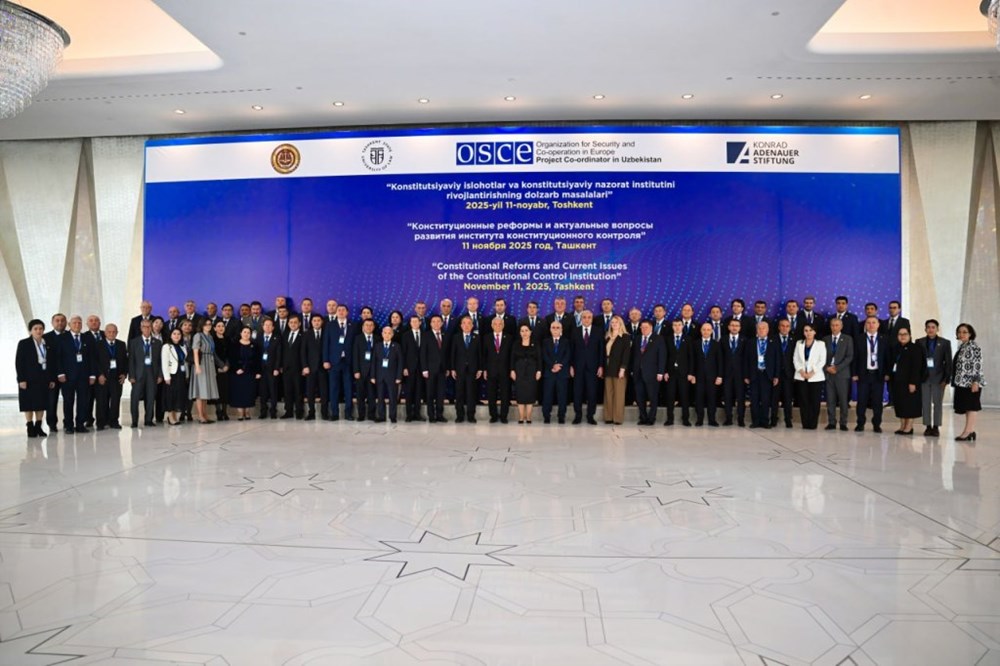
The Conference themed “Actual Issues of Constitutional Reforms and Development of the Institution of Constitutional Control”, organised on the occasion of the 30th anniversary of the establishment of the Constitutional Court of the Republic of Uzbekistan, was held in Tashkent on 11 November 2025. Delivering a speech at the opening session of the conference, which brought together presidents and representatives of constitutional courts from Asia, Europe and the Turkic world, President Özkaya congratulated the Constitutional Court of Uzbekistan on its 30th anniversary and extended his best wishes to the Court on assuming the Presidency of the AACC from the Constitutional Court of the Kingdom of Thailand.
Expressing his belief that the experience gained by the Constitutional Court of the Republic of Türkiye during the term of its Presidency of the AACC between 2012 and 2014 would also contribute to the new term, President Özkaya emphasised that cooperation among constitutional courts plays a vital role in fostering a legal culture that transcends national borders. President Özkaya, affirming that constitutional justice is fundamentally grounded in shared values such as the rule of law, human dignity, and the universality of fundamental rights, underlined that the protection and promotion of these common values rests with both national courts and constitutional jurisdictions engaged in dialogue at the regional and global levels.
He further expressed that the AACC unites constitutional courts from diverse legal systems, and continued “This Association provides a platform for dialogue, which regards the diversity of the Asian continent as a source of enrichment and harmonises different traditions around the shared principles of human rights, justice, and the rule of law.”
Stressing that the Constitutional Court of the Republic of Türkiye takes great pride in serving as the Permanent Secretariat of the Center for Training and Human Resources Development of the AACC, President Özkaya noted that the 13th Summer School Programme, organised this year under the theme “Family Life in the Constitutional Perspective and Right to Respect for Family Life”, had been successfully completed. In this regard, he expressed “We firmly believe that this dialogue among constitutional courts will, in the future, make the Asian continent one of the centres of constitutional principles and human rights awareness. For this reason, our Court is determined to further deepen this cooperation in a spirit of solidarity, mutual respect and shared learning.”
AACC Presidency was Handed over to the Constitutional Court of the Republic of Uzbekistan
Following the opening remarks, a ceremony was held during which the Presidency of the Association of Asian Constitutional Courts and Equivalent Institutions, previously assumed by the Constitutional Court of the Kingdom of Thailand, was officially handed over to the Constitutional Court of the Republic of Uzbekistan.
Digitalisation Profoundly Affects the Protection of Constitutional Rights
In his address entitled “Access to Constitutional Justice and Protection of Fundamental Rights in the Digital Era”, delivered during the session held after the handover ceremony, President Özkaya stated that the constitution serves as the autobiography of a state, which reflects not only its legal order but also the society’s political culture, shared values, and future aspirations. He added that constitutional reforms therefore represent a process through which societies redefine themselves.
President Özkaya outlined the inherent characteristics of human rights, stating “First, human rights are inherent to every person simply for being human. Second, they are inalienable and non-transferable. Accordingly, a person cannot waive his rights, nor can the state revoke them. Third, the principle of holism and complementarity applies, which means that protecting a particular right also entails the protection of other rights. These characteristics demonstrate that human rights constitute not only a legal framework, but also a system of moral and human values. Therefore, constitutional reforms must aim at ensuring more effective protection of these rights at both national and international levels.”
Drawing attention to the impact of globalisation and digitalisation on the legal order, President Özkaya noted “Artificial intelligence, digital platforms, big data systems and algorithmic decision-making processes profoundly affect not only social relations but also the manner in which constitutional rights are protected.” He stated that this situation calls for a reinterpretation of the traditional understanding of rights under the constitution.
President Özkaya further stated that while social media has created a new public sphere in terms of freedom of expression, it has also given rise to new challenges such as disinformation, hate speech and digital censorship. In this regard, he expressed “The Turkish Constitutional Court primarily assesses whether expressions of insult and hate speech on social media have disrupted the balance that must be maintained between freedoms of expression and the press, and the right to honour and reputation. It seeks to protect individuals’ right to honour and reputation without unduly restricting the freedoms of expression and the press. Thus, it should be noted that social media or digital platforms cannot be regarded as forums where insults, hate speech, or violence are freely permissible.”
Addressing the constitutional implications of artificial intelligence, President Özkaya noted that the integration of AI systems into decision-making processes raises new constitutional debates concerning the principle of equality and the right to a fair trial. He stated
“The inherent unpredictability of algorithmic decisions and the diminishing role of human oversight raise the question of how the principle of the rule of law can be maintained in the digital era. Albeit having the potential of enhancing democratic participation, digital platforms also pose the risk of undermining the legitimacy of democracy through political manipulation, data-driven propaganda, and disinformation. All these developments demonstrate that the constitutional law cannot be limited to safeguarding traditional rights, and that it must also ensure the protection of emerging freedoms in the digital age. In this regard, a key focus of forthcoming constitutional reforms will be the pursuit of a legal system in the technological era that upholds human dignity.
President Özkaya also noted that the Constitutional Court of the Republic of Türkiye is among the world’s earliest and most established constitutional courts, and that this long-standing experience has gained a new dimension with the introduction of the individual application mechanism. Emphasising that the individual application mechanism, which was adopted in 2012, serves as one of the most significant guarantees of access to constitutional justice and has been cited as a model by the European Court of Human Rights, President Özkaya remarked “Individuals now have direct access to the Constitutional Court, thereby transforming constitutional justice from an abstract concept into a concrete legal remedy”. He also noted that as of 1 October 2025, individual applications may also be submitted electronically, which has further facilitated individuals’ access to the Court.
Concluding his remarks, President Özkaya emphasised that constitutional review bodies function as a counterbalancing mechanism that oversees the compliance of reforms with the rule of law principle and ensures the preservation of constitutional values. He stated “Constitutional reforms should centre on human dignity, freedom, and justice. The purpose of the constitutional review is to ensure that these values are not only enshrined in legal texts but also fully realised in every aspect of life.”
During his visit to Uzbekistan, President Özkaya also paid a courtesy visit to the Ambassador of the Republic of Türkiye to Tashkent, Mr. Ufuk Ulutaş. He was accompanied by Secretary General Mr. Murat Azaklı and the Coordinator of the Research Centre for Constitutional Justice (RCCJ), Mr. Ömer Gedik.
Click for the full text of the remarks delivered by President Kadir Özkaya.